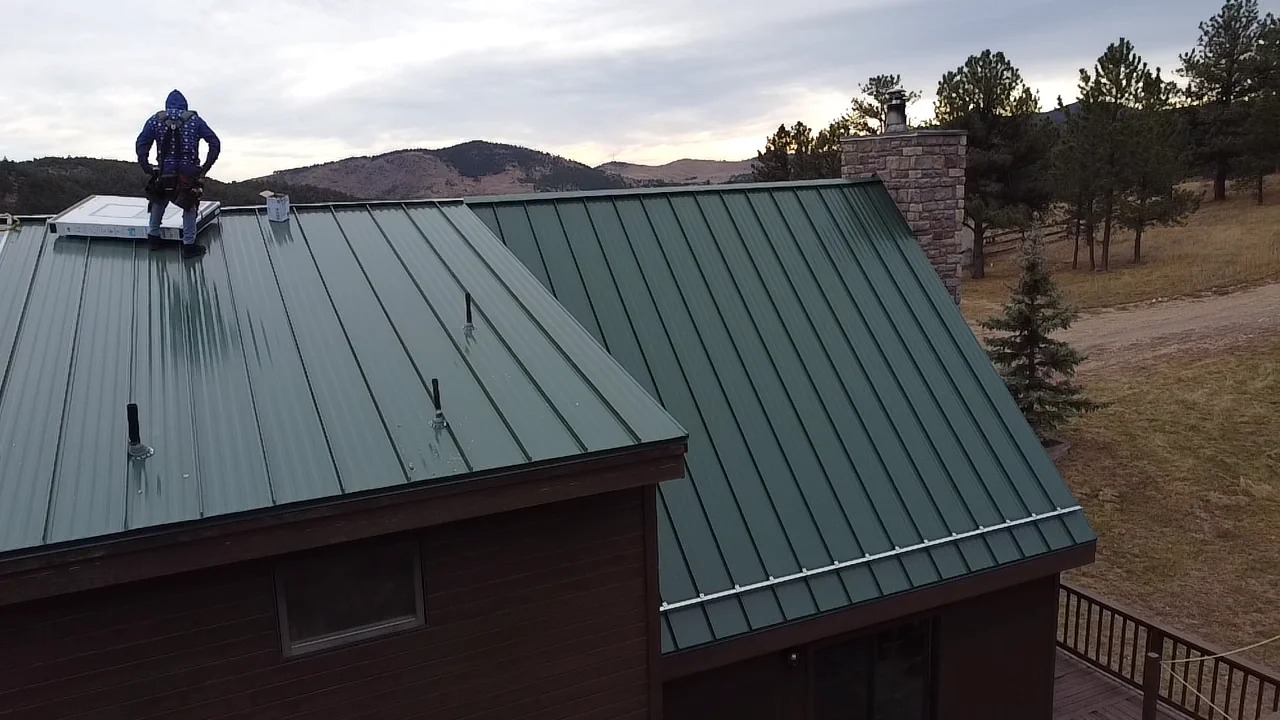
Winter roof leaks in Colorado often result from ice dams, damaged shingles, deteriorating flashing, or freeze-thaw cycles that allow moisture beneath roofing materials. Homeowners should contain interior water, document visible damage, and schedule a professional roof inspection. Prompt repairs help prevent moisture intrusion, insulation damage, wood rot, and costly structural problems.
Key Takeaways
- Ice dams can trap melting snow along roof edges, forcing water beneath shingles and into the home.
- Freeze-thaw cycles can worsen existing roofing damage by allowing moisture to expand and contract within vulnerable areas.
- A ceiling water stain does not necessarily indicate that the roof leak is directly above it.
- Never climb onto an icy or snow-covered roof to investigate or attempt temporary repairs.
- Document leaks with photographs, contain interior water, and arrange a professional inspection as soon as possible.
What Causes Winter Roof Leaks in Colorado?
Winter roof leaks in Colorado commonly develop when snow, ice, fluctuating temperatures, and existing roofing damage compromise the roof’s ability to shed water. Identifying the underlying cause helps determine whether a targeted repair or more extensive restoration is necessary.
The following conditions frequently contribute to winter water intrusion:
1. Ice Dams Along Roof Edges
Ice dams develop when heat escaping through the roof melts accumulated snow. Meltwater travels toward colder roof edges, where it refreezes and creates an ice barrier.
Additional melting snow can collect behind the ice, eventually working beneath shingles and roof underlayment. Water may then enter the attic, insulation, walls, or ceilings.
2. Damaged or Deteriorating Shingles
Missing, cracked, curled, or lifted shingles create openings where melting snow and winter precipitation can penetrate the roofing system.
Strong winds and severe thunderstorms throughout Northern Colorado can loosen roofing materials before winter arrives. Even minor damage can become a source of water intrusion when snow and ice accumulate.
3. Compromised Flashing and Roof Penetrations
Flashing protects vulnerable transitions around chimneys, skylights, vents, valleys, and other roof penetrations. Deteriorated sealants, loose flashing, and damaged metal components can allow water beneath the roofing system.
Repeated temperature changes can also stress sealants and roofing materials, increasing the likelihood of leaks around these connections.
4. Freeze-Thaw Damage
Northern Colorado experiences frequent winter temperature fluctuations, with freezing overnight conditions followed by daytime warming. Water entering small cracks or openings can freeze, expand, and worsen existing damage.
These cycles can gradually compromise shingles, flashing, underlayment, and other roofing components.
How Can You Identify the Source of a Winter Roof Leak?
Identifying a winter roof leak requires examining both the interior symptoms and the roofing system because water does not always enter directly above the visible damage.
Common warning signs include:
- Brown or yellow ceiling stains.
- Water droplets forming around light fixtures or ceiling seams.
- Peeling paint or bubbling drywall.
- Damp attic insulation or visible moisture on roof decking.
- Musty odors indicating prolonged moisture exposure.
- Water collecting around windows or along interior walls.
Homeowners should inspect accessible interior areas without entering unsafe attic spaces or climbing onto the roof.
Expert tip: A winter ceiling leak does not necessarily mean water is entering directly above the visible stain. Water can travel along roof decking, framing, or insulation before reaching the interior, making the actual entry point difficult to identify.
Document the leak’s location, photograph visible damage, and contain interior water where safely possible. A professional inspection can help trace moisture back to its actual entry point.
What Should You Do Immediately When Your Roof Starts Leaking in Winter?
Homeowners should prioritize interior water containment and personal safety while arranging professional roof repairs. Temporary measures can reduce additional damage, but they should not replace a permanent repair.
Follow these steps:
- Protect the interior: Place buckets or waterproof containers beneath active drips. Move furniture, electronics, and valuables away from affected areas.
- Document the damage: Photograph ceiling stains, water accumulation, damaged belongings, and any visible interior deterioration. Record when the leak started and whether it worsens during snowfall or warmer daytime temperatures.
- Address electrical hazards: If water is near electrical fixtures, outlets, or wiring, avoid touching the affected area. Shut off power to the affected circuit only if you can safely access the breaker panel, and contact a qualified electrician when necessary.
- Reduce additional moisture: If water is pooling in a ceiling, do not puncture or cut the drywall yourself. A professional can assess whether controlled drainage is appropriate.
- Contact a roofing contractor: Arrange an inspection to identify the entry point, evaluate the roofing materials, and determine the appropriate repair.
Avoid climbing ladders or walking on snow-covered, icy roofing materials. Applying temporary patches or removing ice without proper equipment can cause injuries and additional roof damage.
How Do You Know If a Winter Roof Leak Needs Professional Repair?
A winter roof leak requires professional attention when water continues entering the home, roofing materials are visibly damaged, or moisture affects insulation and structural components.
The following diagnostic matrix can help homeowners understand the appropriate response.
| Warning Sign | Possible Cause | Recommended Action |
| Water stains on ceilings | Roof penetration or ice dam | Schedule roof inspection |
| Ice buildup along eaves | Potential ice dam formation | Have a professional assess the roof |
| Missing or lifted shingles | Wind damage | Arrange roofing repairs |
| Water near skylights | Damaged flashing or seals | Inspect roof penetrations |
| Damp attic insulation | Moisture intrusion | Assess insulation and roof decking |
| Sagging ceiling | Significant water accumulation | Keep clear of the area and seek immediate professional assistance |
Some conditions require immediate attention. Active leaks near electrical systems, substantial ceiling sagging, and rapidly spreading water damage should be treated as urgent safety concerns.
How Can Northern Colorado Homeowners Prevent Winter Roof Leaks?
Preventing winter roof leaks starts with maintaining roofing materials, managing attic moisture, and addressing storm damage before freezing temperatures arrive.
Summit Roofing Solutions has served homeowners and businesses in Greeley, Colorado, since February 2012. Our team provides residential and commercial roofing services throughout Fort Collins, Loveland, Windsor, and surrounding Northern Colorado communities.
Several regional conditions make preventative roof maintenance particularly relevant.
Freeze-thaw exposure: Repeated freezing and daytime warming can worsen small openings around flashing, shingles, and roof penetrations. Proper underlayment and flashing help protect vulnerable roof areas.
Snow and ice accumulation: Snow adds weight to roofing systems, while melting and refreezing can contribute to water intrusion near roof edges. Proper drainage and roof condition help support winter performance.
High winds and hail: Northern Colorado’s severe thunderstorms can damage shingles, vents, gutters, and flashing. Identifying storm damage before winter reduces the likelihood of existing vulnerabilities developing into leaks.
We recommend the following preventative measures:
- Schedule a professional roof inspection before winter.
- Replace damaged, missing, or deteriorating shingles.
- Check flashing around chimneys, skylights, and vents.
- Maintain gutters and downspouts to support proper drainage.
- Address attic ventilation and insulation concerns.
- Investigate previous ceiling stains or signs of moisture intrusion.
- Arrange an inspection following significant hail or wind events.
Homeowners should also address existing roof damage promptly rather than waiting for the next snowfall to reveal a problem.
When Should You Call a Roofing Contractor for Winter Roof Leaks in Colorado?
Contact a roofing contractor as soon as you notice recurring moisture, active dripping, damaged shingles, or signs of water intrusion around roof penetrations.
Professional roofing contractors can evaluate the entire roofing system rather than focusing exclusively on the visible interior stain.
A winter roof inspection may include:
- Examining accessible shingles and roofing materials.
- Evaluating flashing around roof penetrations.
- Checking valleys, roof edges, and other vulnerable transitions.
- Inspecting accessible attic areas for moisture and insulation damage.
- Identifying potential ice dam damage.
- Recommending temporary protection and permanent repairs.
At Summit Roofing Solutions, we provide roof repairs, replacements, new construction roofing, and storm damage restoration. Our team also assists homeowners navigating insurance-related roofing repairs.
Property owners can read our local client reviews in Greeley to learn more about our roofing services and customer experiences.
For winter leaks that require more extensive work, a professional assessment can help determine whether localized repairs or a complete roof replacement is the appropriate solution.
Frequently Asked Questions
Can a roof leak during winter even when it is not snowing?
Yes. Winter roof leaks can occur during freezing rain, rain-on-snow events, or periods when existing roofing damage allows moisture inside. Previously accumulated snow can also melt and expose vulnerabilities in shingles and flashing.
Should I remove ice dams from my roof myself?
No. Removing ice dams with shovels, hammers, or other tools can damage shingles, gutters, and flashing while creating serious fall hazards. Have a qualified roofing professional assess the ice accumulation and recommend a safe solution.
Will homeowners insurance cover winter roof leaks?
Homeowners insurance may cover roof leaks caused by a covered sudden event, such as certain wind or hail damage. Coverage for gradual deterioration, neglected maintenance, or preventable damage may be excluded, so homeowners should review their policy and document the damage before filing a claim.
How quickly should a winter roof leak be repaired?
Active roof leaks should be evaluated as soon as possible, even if the visible water intrusion appears minor. Delayed repairs can lead to damaged insulation, mold growth, deteriorating drywall, and wood rot.
Summit Roofing Solutions, LLC is the trusted, family-run Northern Colorado roofing contractor, providing high-quality craftsmanship and reliable roofing services across Greeley, Fort Collins, and Loveland for over 13 years since February 2012. Backed by decades of combined experience, we specialize in both residential and commercial roofing, handling full roof replacement, expert new construction roofing, and complete storm damage restoration. We are the local experts for seamless insurance claim repair, always prioritizing clear communication, clean job sites, and dependable timelines. With an A+ BBB rating and nearly 100 five-star reviews, when you need a top-rated Greeley roofer or certified Fort Collins roofing company for hail damage, trust us to protect your property and deliver total peace of mind under your next roof. You can learn more about our services, view customer reviews, and connect with a trusted Northern Colorado roofing contractor by visiting Summit Roofing Solutions on Google Maps, proudly serving Greeley, Fort Collins, Loveland, and surrounding communities.