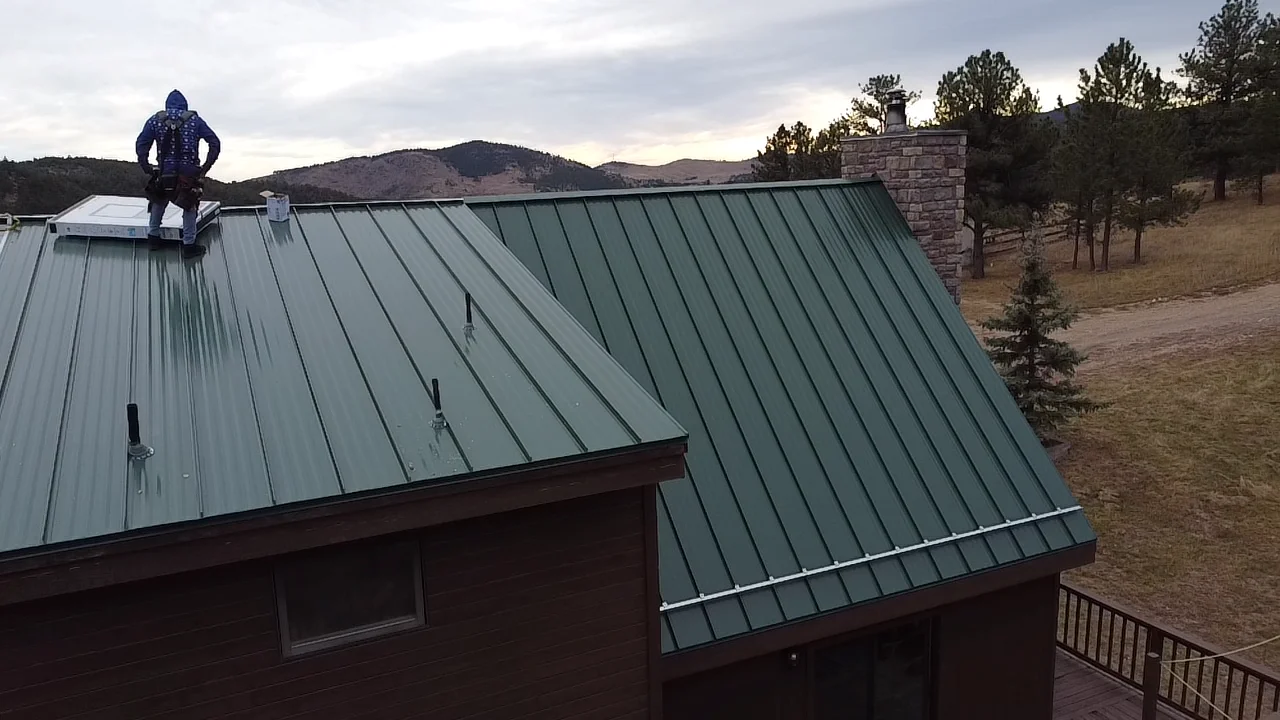
Metal roofs usually handle hail better than many traditional roofing materials, but they can still dent, lose coating, suffer seam damage, or develop leaks after a severe storm. The actual damage depends on hail size, wind speed, panel gauge, roof slope, installation quality, and whether the impact affects a functional part of the roof.
Key Takeaways
- Metal roofs are highly durable, but they are not completely hail-proof, especially during large Northern Colorado hailstorms.
- Cosmetic dents are common, but functional damage can happen when seams, fasteners, flashing, or coatings are affected.
- A professional inspection is the safest way to tell whether a metal roof has only surface dents or true storm damage.
- Metal roofing Northern Colorado hail performance depends on material type, panel thickness, roof design, and installation quality.
- Homeowners in Greeley, Fort Collins, Loveland, Evans, and Windsor should document hail damage quickly before starting an insurance claim.
Can Hail Damage a Metal Roof?
Yes, hail can damage a metal roof, but the damage often looks different from what we see on asphalt shingles.
With shingles, hail may knock off granules, bruise the mat, crack the surface, or expose the underlayment. With metal roofing, hail usually leaves dents, dings, coating marks, scratches, or impact points.
That does not always mean the roof is leaking. A metal roof can have visible dents and still shed water properly.
The bigger concern is whether hail has damaged the parts of the roof that keep water out. That includes seams, panel laps, fasteners, ridge caps, valleys, vents, pipe boots, flashing, and transitions.
At Summit Roofing Solutions, LLC, we have served Greeley, CO and Northern Colorado for over 13 years. In areas near Downtown Greeley, the University of Northern Colorado, Evans, Windsor, Fort Collins, and Loveland, we often see hail damage that varies block by block depending on storm path, wind direction, and hail size.
That is why two homes in the same neighborhood can have very different roof conditions after the same storm.
Many homeowners ask us, What Happens to Metal Roofs When it Hails? The honest answer is that some roofs only show cosmetic dents, while others need repairs because the hail affected the roof system’s ability to protect the property.
What Kind of Hail Damage Shows Up on Metal Roofing?
Metal roof hail damage can range from minor surface marks to major functional damage.
The most common signs include round dents, crease marks, chipped paint, scratched protective coating, bent trim, loose fasteners, damaged gutters, and impact marks on roof accessories.
Some dents are easy to see from the ground. Others only show up when the light hits the roof at a certain angle.
On standing seam metal roofs, hail may dent the flat field of the panels while leaving the seams intact. On exposed fastener metal roofs, hail can affect washers, screws, and panel attachment points.
On commercial metal roofing, we also look closely at seams, curbs, HVAC penetrations, skylights, and drainage areas. A small opening around one of these points can create a leak even when the rest of the panel field looks fine.
A practical pro-tip from our field experience: after a hailstorm, do not judge your roof only by the largest dents you can see. We often find the most important damage around roof edges, flashing, vents, and fasteners because those are the areas where water intrusion usually begins.
Is Hail Damage on a Metal Roof Cosmetic or Functional?
This is one of the biggest questions in any metal roof hail inspection.
Cosmetic damage affects appearance. Functional damage affects performance.
A cosmetic dent may look frustrating, especially on a newer roof, but it may not stop the roof from shedding water. Functional damage is more serious because it can shorten the roof’s life or allow moisture to enter the building.
Functional metal roof damage may include punctures, cracked coatings, open seams, bent locks, damaged fasteners, separated flashing, broken sealant, or denting that changes water flow.
This distinction matters because insurance policies may treat cosmetic and functional damage differently. Some policies include cosmetic damage exclusions or special rules for metal roofing.
That is why we always recommend checking your policy and having the roof inspected by a qualified local roofing contractor before assuming the claim outcome.
The phrase What Happens to Metal Roofs When it Hails? may sound simple, but the answer often comes down to whether the roof was only marked or whether the system was actually compromised.
Why Does Metal Roofing Northern Colorado Hail Damage Vary So Much?
Metal roofing Northern Colorado hail damage varies because our storms are rarely gentle or uniform.
Northern Colorado can experience fast-moving storms with wind-driven hail, sudden temperature shifts, and hailstones that range from pea-sized to golf-ball-sized or larger. Wind can push hail sideways, making impacts more severe on one roof slope than another.
A north-facing slope may show more impact than a south-facing slope. A steeper section may shed hail better than a low-slope section. A roof near open fields may take a harder hit than one shielded by trees or nearby buildings.
The metal roof itself also matters.
Steel, aluminum, copper, and stone-coated steel do not respond to hail in the exact same way. Panel thickness, coating type, profile shape, rib height, underlayment, decking, and installation quality all affect performance.
For example, a thicker steel panel may resist punctures better than a thinner metal panel. A textured or ribbed panel may hide minor dents better than a smooth, flat panel.
This is why metal roofing Northern Colorado hail inspections should be specific to the property, not based on a general assumption that all metal roofs perform the same.
Does a Metal Roof Leak After Hail?
A metal roof does not automatically leak after hail.
Many metal roofs continue to shed water after a hailstorm, even when visible dents are present. However, leaks can happen when hail damages the roof’s protective details.
The highest-risk areas include:
- Panel seams
- Exposed fasteners
- Ridge caps
- Valleys
- Roof-to-wall flashing
- Pipe boots
- Skylights
- Chimneys
- HVAC curbs
- Gutters and drainage paths
Water usually finds the weakest point. A dent in the middle of a panel may not leak, but a damaged seam or lifted flashing can allow water inside.
Leaks may also appear days or weeks later. Sometimes the first sign is a ceiling stain after the next rain, not during the hailstorm itself.
If you notice dripping, staining, musty smells, wet insulation, or bubbling paint after a storm, schedule an inspection right away. Waiting can make the damage worse and may complicate the claim process.
What Should You Do After Hail Hits a Metal Roof?
The first step is safety.
Do not climb onto a metal roof after a storm. Metal roofing can be slippery, especially when wet, dented, or covered with loose debris. It is safer to inspect from the ground and call a professional.
Start by taking photos of anything visible from ground level. Look at gutters, downspouts, siding, windows, fencing, garage doors, outdoor furniture, and vehicles.
If those items show dents or impact marks, there is a good chance the roof should be inspected too.
Next, write down the storm date and approximate time. Insurance companies often ask for this information when reviewing hail claims.
Then call a local roofing contractor who understands metal roofing, storm damage, and insurance documentation.
At Summit Roofing Solutions, LLC, we help homeowners and property owners assess the roof, document visible damage, explain repair options, and support the insurance claim process when storm damage is present.
You can also see what our customers are saying about our work throughout Northern Colorado.
Can Small Hail Damage a Metal Roof?
Small hail can damage a metal roof, but it is less likely to cause serious functional damage than larger hail.
Pea-sized or marble-sized hail may leave small surface marks, especially on softer metals or older coatings. Larger hail has a greater chance of denting panels, chipping coatings, damaging flashings, or affecting seams.
Wind also plays a major role.
Small hail falling straight down may be less concerning than smaller hail driven by high winds. Wind-driven hail can strike at sharper angles and hit vulnerable areas like vertical trim, roof edges, and wall transitions.
Roof age matters too. Older coatings, weakened sealant, aging fasteners, and previous storm damage can make a roof more vulnerable during the next hail event.
That is why even smaller hail should not be ignored if the storm was strong enough to damage gutters, siding, vehicles, or nearby roofs.
Are Some Metal Roofs Better for Hail Than Others?
Yes, some metal roofs are better suited for hail-prone areas than others.
The best choice depends on the property, budget, design goals, slope, and exposure. In Northern Colorado, impact resistance should be part of the conversation from the start.
Class 4 impact-rated roofing products are often discussed for hail-prone areas because Class 4 is the highest common impact rating used for many roofing materials.
However, ratings are not the only factor. A quality metal roof still depends on correct installation, proper fastening, good flashing details, and manufacturer-approved components.
Panel profile also matters. Some panels hide dents better than others. Textured finishes, ribbed panels, and stone-coated steel may make minor dents less noticeable than smooth panels.
For homeowners who care deeply about appearance, dent visibility should be discussed before choosing a metal roof.
For commercial properties, performance, drainage, warranty terms, and long-term maintenance may matter more than minor cosmetic dents.
How Do Roofers Inspect Metal Roofing After Northern Colorado Hail?
A proper inspection looks at the whole roof system, not just the panel field.
We inspect each slope, roof edge, penetration, transition, and drainage area. We also check soft metals such as vents, flashing, gutters, and downspouts because these materials often show clear hail impact.
On metal roofs, we look for dent patterns, coating damage, punctures, seam distortion, fastener damage, bent trim, loose components, and signs of water entry.
We also check the attic or interior when there are signs of leaks. Interior evidence can help connect roof damage to water intrusion.
Photos are important. Clear documentation helps homeowners understand the damage and gives insurance adjusters better information.
A strong inspection should answer three questions:
Is the roof damaged?
Is the damage cosmetic, functional, or both?
Does the roof need repair, replacement, or monitoring?
That clear process helps property owners make better decisions after a storm.
Will Insurance Cover Hail Damage on a Metal Roof?
Insurance may cover metal roof hail damage if the policy includes storm damage and the damage meets the policy requirements.
However, every policy is different. Some policies may cover functional damage but not cosmetic damage. Others may have special deductibles, exclusions, or cosmetic waivers for metal roofing.
This is why documentation matters.
Photos, inspection notes, storm dates, repair estimates, and clear explanations can help support the claim. A local contractor can help identify damage, but the insurance company makes the final coverage decision.
We recommend contacting your insurance provider after a professional inspection confirms possible storm damage. Filing too quickly without documentation can create confusion. Waiting too long can also create problems.
The best approach is to document, inspect, and move forward with clear information.
Should You Repair or Replace a Hail-Damaged Metal Roof?
The right choice depends on the type, location, and severity of the damage.
Minor cosmetic dents may not require immediate repair if the roof is still performing properly and the owner is comfortable with the appearance.
Localized functional damage may be repairable. This could include replacing damaged flashing, resealing penetrations, correcting fasteners, or repairing specific panels.
Severe hail damage may require larger repairs or full replacement. This is more likely when the roof has widespread functional damage, compromised seams, punctures, coating failure, or repeated leaks.
Age also matters. If the roof is near the end of its expected service life, replacement may make more sense than patching multiple areas.
For commercial properties, downtime, tenant disruption, warranty terms, and long-term water protection should be part of the decision.
For residential homes, curb appeal, insurance coverage, future resale, and peace of mind often matter too.
Does Metal Roofing Make Sense in Hail-Prone Northern Colorado?
Metal roofing can make strong sense in Northern Colorado, but it should be chosen carefully.
A quality metal roof can offer long service life, strong weather resistance, energy efficiency, and excellent performance when installed correctly. For many homeowners and property owners, it is a durable upgrade compared with traditional roofing.
Still, metal roofing is not the right fit for every budget or every appearance preference.
If you are worried about visible dents, ask about panel styles, finishes, impact ratings, thickness, and warranty terms before installation. The goal is to choose a roof that fits both the property and the local weather risk.
When we talk with clients about metal roofing Northern Colorado hail concerns, we focus on practical expectations. A metal roof may perform very well structurally and still show dents after a severe hailstorm.
Knowing that before installation helps avoid surprises later.
How Can You Reduce Hail Risk on a Metal Roof?
You cannot stop hail, but you can reduce risk with smart roofing choices and routine maintenance.
Choose impact-rated materials when possible. Work with a qualified local roofer. Make sure flashing, fasteners, sealants, and drainage details are installed correctly.
Keep gutters clear so water can drain after storms. Trim branches that could scrape or damage the roof. Schedule inspections after major hail events, especially if nearby homes are filing claims.
For commercial roofs, maintenance plans are especially important. Low-slope metal roofs need regular checks around seams, curbs, rooftop equipment, and drainage points.
For homes, annual roof checks can catch small issues before they become expensive repairs.
The best roof protection comes from a strong system, not just a strong panel.
When Should You Call a Greeley Roofer After a Hailstorm?
Call a Greeley roofer after a hailstorm if you see dents on gutters, damaged siding, loose metal trim, roof debris, interior leaks, or if your neighbors are reporting roof damage.
You should also call if the hail was large, wind-driven, or loud enough to make you wonder whether the roof was hit hard.
In Greeley and the surrounding Northern Colorado area, hail damage can be highly localized. One street may have major damage while another street nearby has very little.
A professional inspection gives you a clearer answer before you decide whether to contact insurance, schedule repairs, or simply monitor the roof.
This is especially important for metal roofs because visible dents do not always tell the full story.
What Happens to Metal Roofs When it Hails? They may dent, scratch, shed water normally, or suffer hidden functional damage depending on the storm and the roof system. The only reliable way to know is to have the roof inspected carefully.
FAQ About Metal Roofs and Hail
Can hail put holes in a metal roof?
Yes, severe hail can puncture a metal roof, but it is not the most common outcome. Punctures are more likely with very large hail, thinner panels, older materials, or vulnerable areas such as seams, flashing, and penetrations.
Are dents in a metal roof always a problem?
No. Some dents are cosmetic and do not affect roof performance. However, dents should still be inspected because hail can also damage seams, coatings, fasteners, and flashing.
How soon should we inspect a metal roof after hail?
We recommend scheduling an inspection as soon as it is safe after the storm. Quick documentation helps identify fresh damage and can make the insurance process easier if a claim is needed.
Is a metal roof better than shingles for hail?
Metal roofing often performs very well in hail, especially when impact-rated and properly installed. However, both metal and shingles can be damaged by severe hail. The best choice depends on the property, budget, and local storm exposure.
Can we file an insurance claim for cosmetic dents?
It depends on your policy. Some insurance policies cover cosmetic damage, while others exclude it or require functional damage. Review your policy and get a professional inspection before making assumptions.
Summit Roofing Solutions, LLC is the trusted, family-run Northern Colorado roofing contractor, providing high-quality craftsmanship and reliable roofing services across Greeley, Fort Collins, and Loveland for over 13 years since February 2012. Backed by decades of combined experience, we specialize in both residential and commercial roofing, handling full roof replacement, expert new construction roofing, and complete storm damage restoration. We are the local experts for seamless insurance claim repair, always prioritizing clear communication, clean job sites, and dependable timelines. With an A+ BBB rating and nearly 100 five-star reviews, when you need a top-rated Greeley roofer or certified Fort Collins roofing company for hail damage, trust us to protect your property and deliver total peace of mind under your next roof. You can learn more about our services, view customer reviews, and connect with a trusted Northern Colorado roofing contractor by visiting Summit Roofing Solutions on Google Maps, proudly serving Greeley, Fort Collins, Loveland, and surrounding communities.