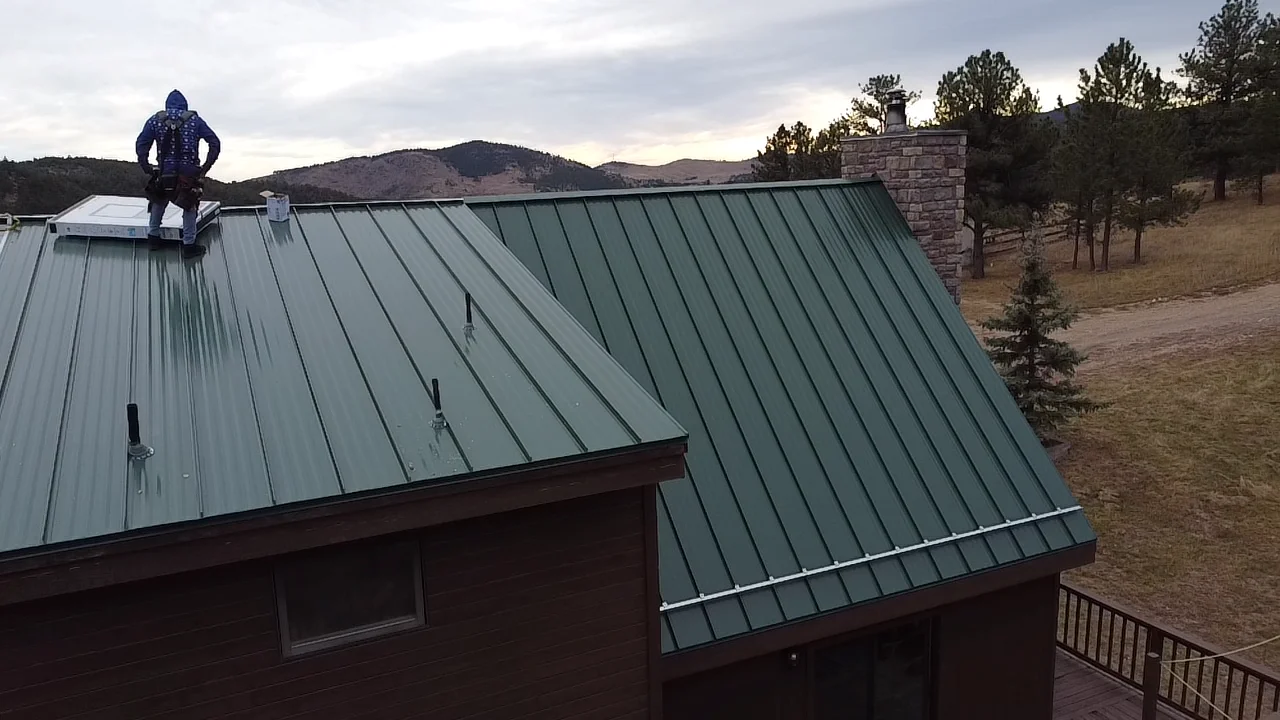
Metal roofing delivers superior durability, energy efficiency, and long-term cost savings compared to traditional asphalt systems, making it one of the fastest-growing roofing choices in Colorado. Homeowners benefit from 40–70 year lifespans, strong resistance to hail and wind, lower cooling costs, and minimal maintenance requirements, especially in high-altitude climates like Northern Colorado.
Key Takeaways
- Metal roofing offers significantly longer lifespan and durability than asphalt shingles, often lasting 40–70 years
- Energy efficiency improvements can reduce cooling costs during Colorado’s hot, sunny summers
- High resistance to hail, wind, and wildfire risk makes it ideal for Northern Colorado weather conditions
- Although upfront costs are higher, long-term savings and fewer repairs often make it more economical
- Proper installation is critical to maximizing performance and insurance benefits
What Are The Benefits Of Metal Roofing For Colorado Homeowners?
When we talk with homeowners across Greeley, Fort Collins, and surrounding communities, the conversation usually starts with longevity and weather protection. Metal roofing stands out because it is engineered to withstand extreme climate swings, from heavy spring hailstorms to dry, high-UV summers.
In Northern Colorado neighborhoods like West Greeley and the areas near the University of Northern Colorado, we frequently see asphalt roofs needing replacement every 12–18 years. In contrast, metal systems can last multiple decades with minimal upkeep.
Summit Roofing Solutions, LLC has been serving Northern Colorado for over 13 years since 2012, and we’ve seen a clear shift in homeowner priorities toward long-term roofing solutions that reduce future stress and repair costs.
One of the most overlooked answers to What Are the Benefits of Metal Roofing is how dramatically it reduces lifetime maintenance. While asphalt shingles often require patching, sealing, and frequent inspections after storms, metal roofing systems are designed to shed debris, resist cracking, and maintain structural integrity far longer.
We’ve also noticed increased adoption in nearby cities like Evans and Windsor, where new construction is prioritizing energy efficiency and insurance resilience from day one.
Early in nearly every consultation, we hear the same question: What Are the Benefits of Metal Roofing compared to traditional shingles, especially in hail-prone regions? The answer consistently comes down to performance, predictability, and reduced long-term cost exposure.
Why are homeowners in Colorado switching to metal roofing systems?
The shift toward metal roofing in Colorado is not just a trend—it’s a response to increasingly unpredictable weather patterns and rising material costs.
Homeowners in areas like Downtown Greeley and near St. Michael’s neighborhood are seeing more frequent hail claims and roof replacements. Metal roofing provides a strong defense against these repeated losses.
From an insurance standpoint, many providers now offer premium discounts for impact-resistant metal roofing systems, especially Class 4 rated options. That alone is influencing buying decisions more than ever before.
Another major factor is lifespan. Asphalt roofs may require replacement two or three times over a homeowner’s tenure. Metal roofing is often a once-in-a-lifetime installation.
We also see growing interest from environmentally conscious homeowners. Steel and aluminum roofing materials are often recyclable, making them a more sustainable choice than petroleum-based shingles.
In fact, when discussing What Are the Benefits of Metal Roofing, sustainability and reduced landfill waste are becoming just as important as durability for many families we work with.
How does metal roofing perform in Colorado weather conditions?
Colorado weather is one of the most demanding environments for any exterior building material. Between hailstorms, high winds, intense UV exposure, and rapid temperature changes, roofing systems are constantly under stress.
Metal roofing performs exceptionally well under these conditions because it expands and contracts without cracking, unlike asphalt shingles. It also reflects solar radiation rather than absorbing it, which helps regulate indoor temperatures.
Hail resistance and storm durability
In Northern Colorado, hail is one of the biggest threats to roofing systems. Metal panels, especially standing seam systems, are designed to resist impact better than traditional shingles.
While no roofing is completely indestructible, metal systems significantly reduce the likelihood of punctures, leaks, and surface degradation after storms.
Wind performance and structural stability
Metal roofing systems are mechanically fastened, which gives them superior wind resistance. In high-wind zones near open plains outside Greeley, this becomes a major advantage.
We often hear from homeowners after storms that metal roofs remain intact while neighboring asphalt roofs show visible damage or missing shingles.
Temperature and energy efficiency benefits
One of the most practical answers to What Are the Benefits of Metal Roofing is energy efficiency.
Metal reflects sunlight rather than absorbing it, which reduces attic heat buildup. In summer months around Weld County, this can noticeably lower cooling costs.
Combined with proper insulation, metal roofing can improve overall home energy performance year-round.
Is metal roofing worth the higher upfront cost?
This is one of the most common concerns we hear from homeowners considering an upgrade.
Yes, metal roofing typically has a higher upfront installation cost compared to asphalt shingles. However, the long-term financial picture tells a different story.
When factoring in lifespan, reduced repair frequency, and energy savings, metal roofing often becomes the more cost-effective option over 20–30 years.
Insurance savings also play a role. Many homeowners in Greeley and nearby Fort Collins have seen reduced premiums after upgrading to impact-resistant roofing systems.
Another key consideration is resale value. Homes with metal roofing often attract stronger buyer interest because the roof is seen as a long-term asset rather than a near-term expense.
In real estate conversations, buyers frequently associate metal roofing with reduced future maintenance, which can improve perceived home value.
This is another reason Why What Are the Benefits of Metal Roofing continues to rank as a high-intent search query among homeowners planning renovations or roof replacements.
We also encourage homeowners to consider lifecycle cost instead of installation cost alone. A roof that lasts 50 years with minimal repairs often outperforms two or three asphalt replacements over the same period.
What are common misconceptions about metal roofs?
Despite growing popularity, several myths still prevent homeowners from considering metal roofing.
Myth: Metal roofs are noisy in the rain
This is one of the most outdated misconceptions. Modern metal roofing systems are installed over solid decking with insulation layers that significantly reduce sound transmission.
Most homeowners report no noticeable difference in interior noise levels compared to asphalt shingles.
Myth: Metal roofs attract lightning
Metal roofing does not increase the likelihood of a lightning strike. In fact, metal is non-combustible and safely disperses electrical energy if a strike does occur.
This makes it a safer option in wildfire-prone or storm-heavy regions.
Myth: Metal roofs rust easily
Today’s metal roofing systems are coated with advanced protective finishes like galvanized or galvalume coatings. These protect against corrosion and significantly extend lifespan.
Regular maintenance is minimal compared to traditional roofing systems.
Myth: Metal roofs make homes hotter
This misconception ignores reflective coating technology. In reality, metal roofing often reduces heat absorption and improves energy efficiency.
In Colorado’s high-altitude climate, this can make a measurable difference in indoor comfort.
As we continue to educate homeowners, What Are the Benefits of Metal Roofing becomes clearer through real-world performance rather than outdated assumptions.
How do metal roofs compare to asphalt shingles over time?
The long-term comparison between metal and asphalt roofing is one of the most important decision factors for homeowners.
Asphalt shingles are cheaper upfront but require more frequent replacement and repairs. Metal roofing, while more expensive initially, provides extended durability and fewer lifecycle costs.
In neighborhoods like West Greeley and surrounding Weld County developments, we see asphalt roofs typically replaced multiple times over 40 years, while metal roofs often remain in place with minimal intervention.
Maintenance is another major difference. Asphalt roofs require regular inspection for curling, granule loss, and storm damage. Metal roofs typically require only occasional inspections and basic cleaning.
We also find that homeowners appreciate the reduced worry factor. After installation, metal roofing provides a long-term solution with fewer unexpected surprises.
What should homeowners know before installing metal roofing?
Installation quality is just as important as material selection.
Proper underlayment, fastening systems, and flashing details are essential to performance. Poor installation can undermine even the best roofing materials.
A technician on our team often reminds homeowners: “Metal roofing is only as good as the details beneath it. Precision in installation is what delivers its full lifespan advantage.”
We also recommend reviewing contractor experience specifically with metal systems, not just general roofing.
Before making a decision, homeowners often review local feedback and project results. You can also see what our customers are saying to better understand real-world performance expectations.
Understanding What Are the Benefits of Metal Roofing also means understanding that installation expertise directly impacts long-term success.
FAQs
How long does a metal roof last in Colorado?
Most metal roofs last 40–70 years depending on material type, installation quality, and environmental exposure.
Does metal roofing increase home value?
Yes, metal roofing often increases resale value due to its durability, energy efficiency, and low maintenance appeal.
Can metal roofs handle hailstorms?
Yes, metal roofs are highly resistant to hail damage, especially Class 4 impact-rated systems commonly used in Colorado.
Are metal roofs more expensive than shingles?
Yes upfront, but they typically cost less over time due to reduced repairs and longer lifespan.
Do metal roofs require maintenance?
Minimal maintenance is required, usually limited to occasional inspections and debris removal.
Summit Roofing Solutions, LLC is the trusted, family-run Northern Colorado roofing contractor, providing high-quality craftsmanship and reliable roofing services across Greeley, Fort Collins, and Loveland for over 13 years since February 2012. Backed by decades of combined experience, we specialize in both residential and commercial roofing, handling full roof replacement, expert new construction roofing, and complete storm damage restoration. We are the local experts for seamless insurance claim repair, always prioritizing clear communication, clean job sites, and dependable timelines. With an A+ BBB rating and nearly 100 five-star reviews, when you need a top-rated Greeley roofer or certified Fort Collins roofing company for hail damage, trust us to protect your property and deliver total peace of mind under your next roof. You can learn more about our services, view customer reviews, and connect with a trusted Northern Colorado roofing contractor by visiting Summit Roofing Solutions on Google Maps, proudly serving Greeley, Fort Collins, Loveland, and surrounding communities.